Transforming the future of hypersonics and space access.
Not another rocket.
A new way to accelerate.
Rockets carry too much complexity into flight.
Longshot is moving more of the fuel and systems onto the ground.
Building a reusable and cheaper accelerator infrastructure for space access and hypersonics.
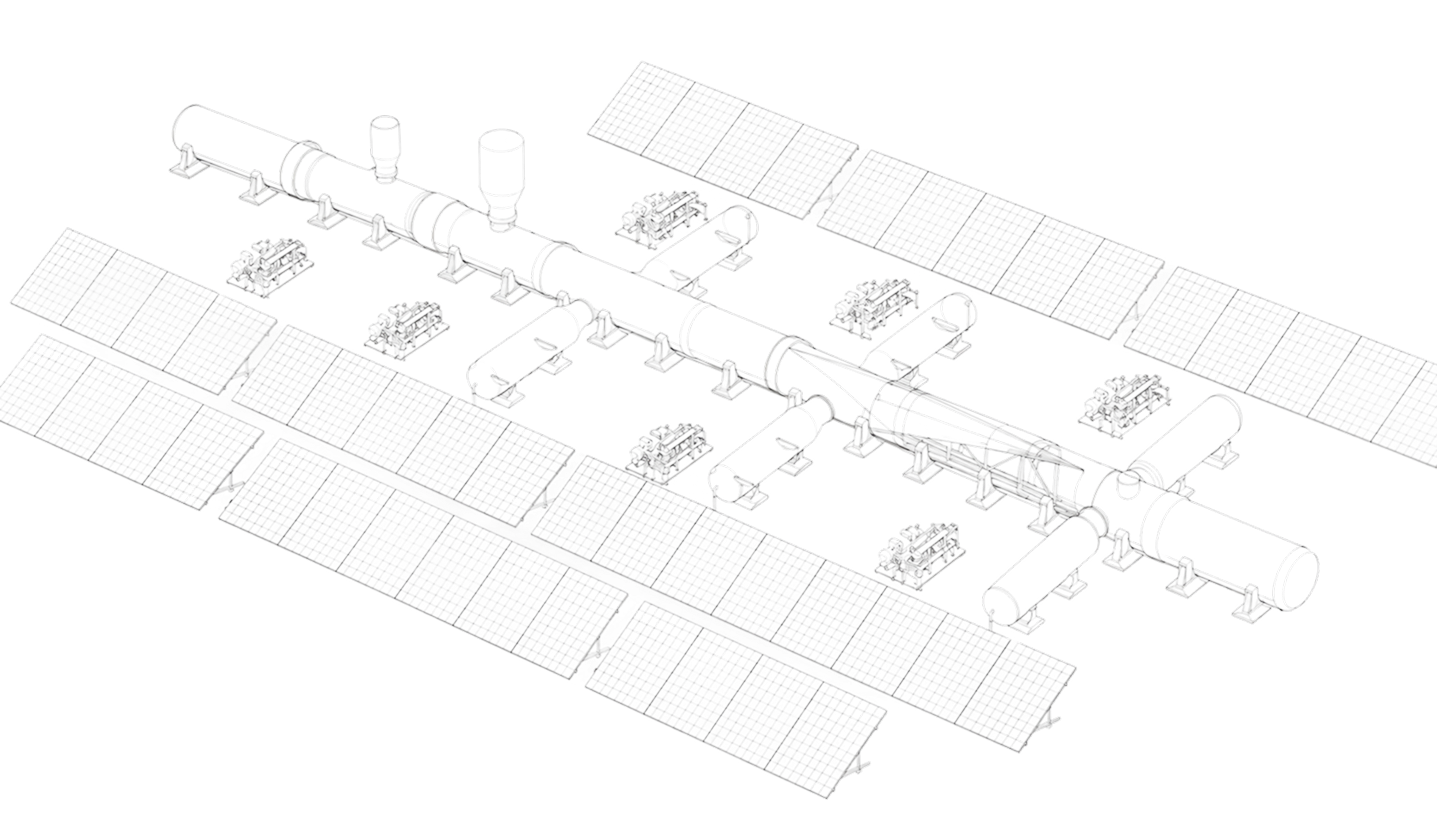






Defense and aerospace teams need faster, more affordable ways to test high-speed systems. But the infrastructure behind hypersonic testing is still costly, scarce, and too low-cadence for the speed modern development requires.

Access is limited
Specialist test infrastructure is scarce, oversubscribed, and difficult to schedule.

Iteration is too slow
Low-cadence testing limits learning cycles and delays development.

Nationally Important
Hypersonics are a strategic priority across defense, aerospace, and national security.
Real hardware
Three stages.
One acceleration platform.
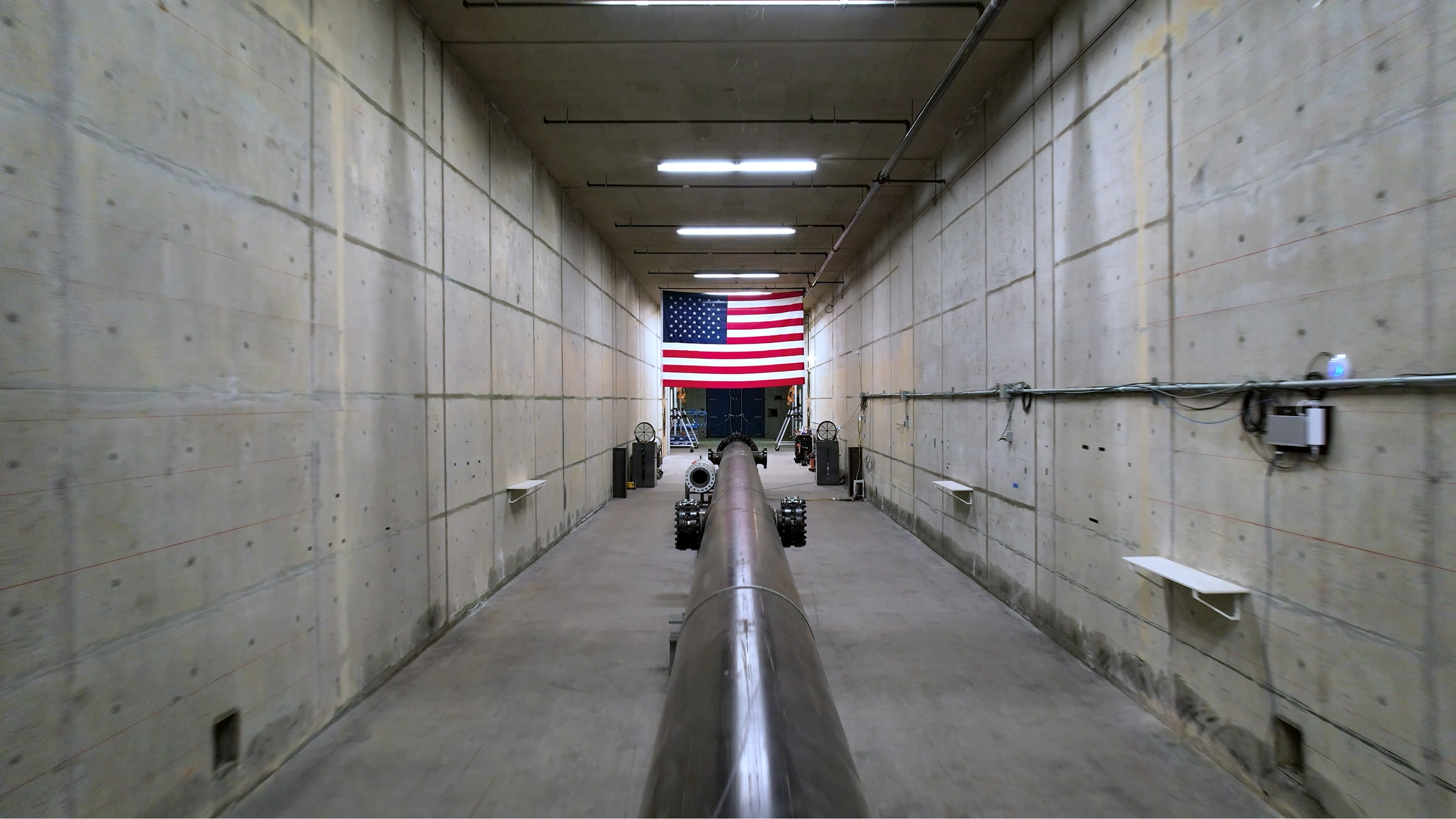
Ground-Based Acceleration
A reusable acceleration system designed to move more of the launch energy and infrastructure onto the ground.
Reusable ground infrastructure
Compressed-light gas acceleration
Faster hardware iteration
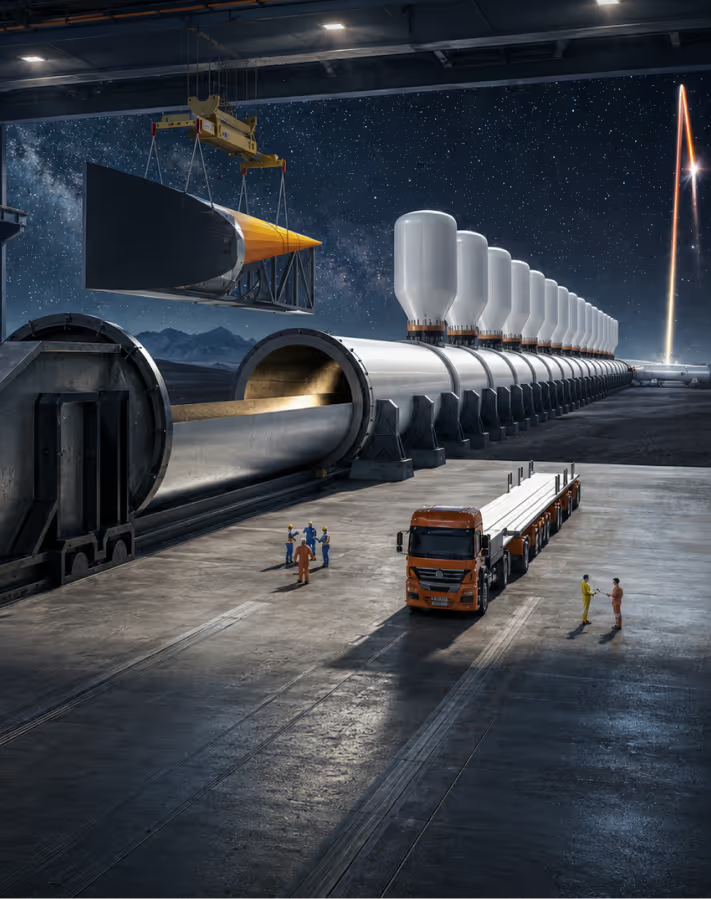
Hypersonic Testing
Affordable, repeatable test capacity for teams developing real-world hypersonic systems.
High-cadence flight testing
Lower-cost test campaigns
Defense and aerospace validation
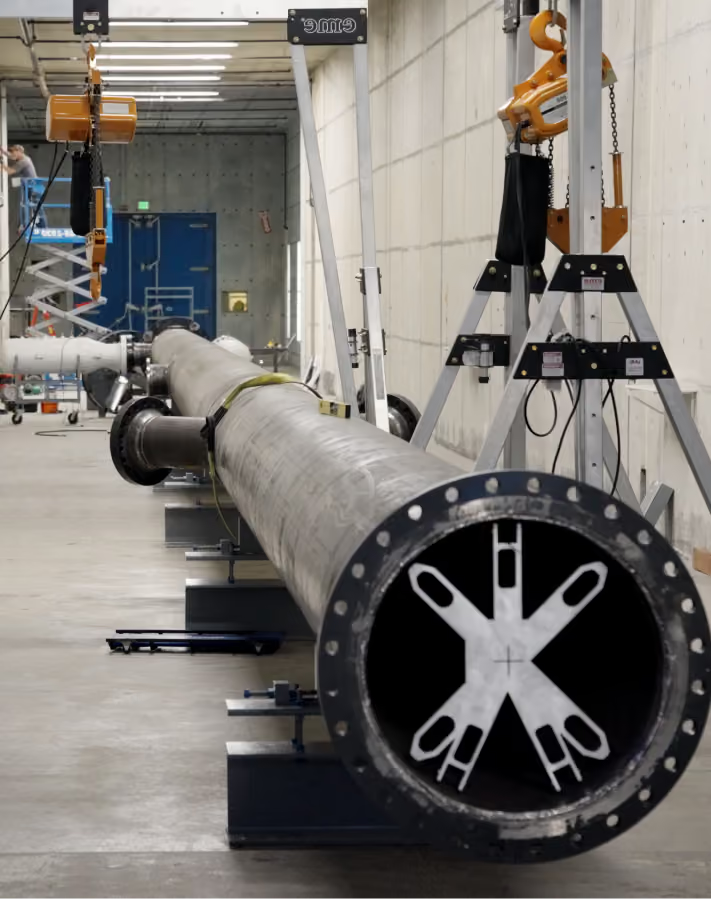
Space Access
A long-term launch pathway designed to reduce the cost and complexity of reaching Low Earth Orbit.
Meant for non-human cargo of all kinds
Lower-cost than starship orbital access
Future in-space services
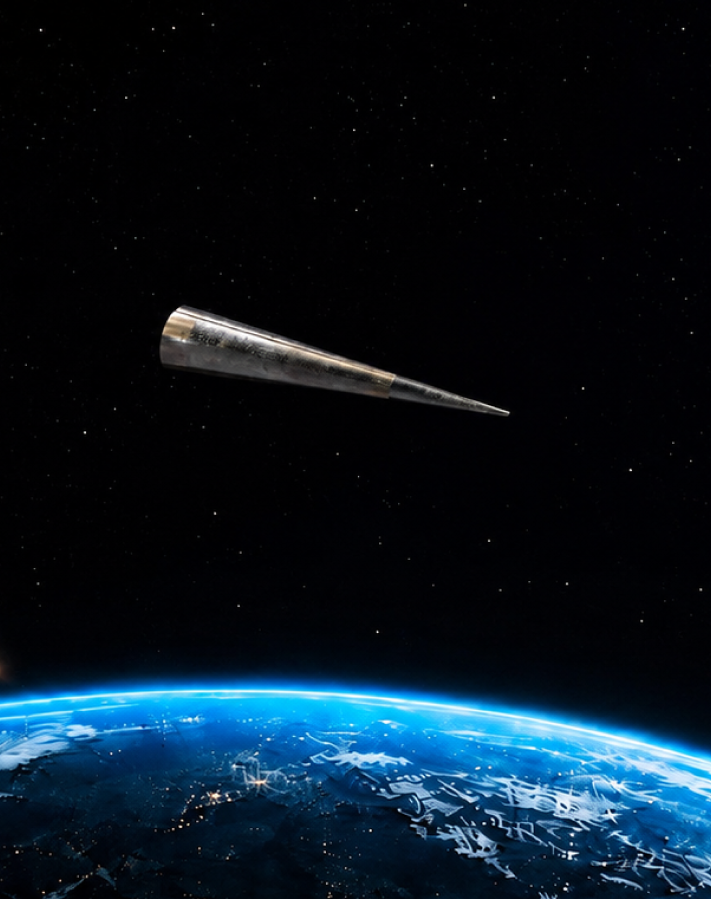
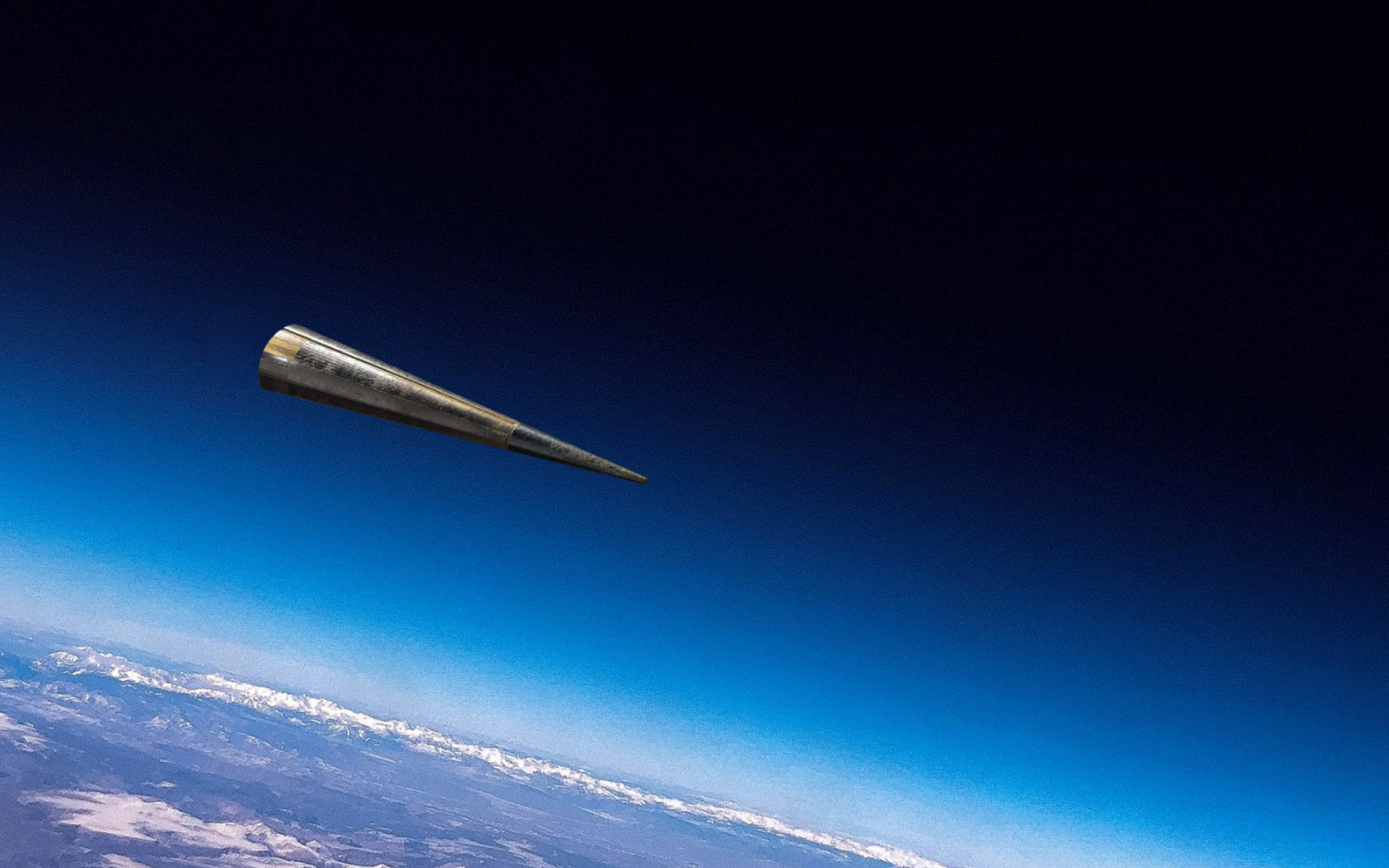
Acceleration starts on the ground.

Learn more
about Longshot
What is a multi-injection pneumatic cannon?
A multi-injection pneumatic cannon is a long tube that launches payloads using many small injections of compressed gas. Picture a potato gun, but instead of a single blast of air, you have a bunch of separate air tanks spaced along the barrel. As the payload speeds past each one, each tank fires, giving it another push. Instead of one big push at the beginning of the cannon, it's a series of pushes, allowing the payload to gain increasing speed with each push.
Why have multiple injections instead of one huge blast at the start?
Having multiple injections means each individual push is gentler on the payload, but also allows the payload to reach a very high final speed by the time it exits the barrel without harming the barrel.
What's the issue with rockets?
The core issue is something called the tyranny of the rocket equation. In essence, a rocket is a tool for lifting its own fuel that happens to do a little bit of useful transportation work. Current rockets spend a remarkable (~90%) proportion of their total mass on fuel because every additional kilogram of payload requires additional fuel to lift it, which in turn requires more fuel to lift that fuel. There’s a breaking point: a rocket cannot economically carry the industrial quantities of raw materials needed to build space infrastructure without entering a feedback loop in which fuel must carry its own fuel. Even when a rocket is reusable, such as the Falcon 9, a full engine and vehicle must be built, fueled, and flown each time. Rockets incur enormous costs and downtime because carrying a fuel supply and burning it continuously during flight are fundamental to their design.
How will the G forces not crush the payload?
G-force is a measure of acceleration, and acceleration depends on how much runway there is to build up speed. A quick acceleration over a short runway results in a violent jolt, while the same acceleration over a much longer distance creates a gentler push. Every time we double the length of the runway, the acceleration halves. Longshot’s cannon is very long: nearly ~10 kilometer long. At that length, the pressure exerted on the payload is ~250G’s. For context, your phone can survive ~700G’s.
How is Mach 23 even possible? Haven't you only reached Mach 4?
Light gas guns such as the AEDC G-range have frequently gone at these speeds since the 1950s. While our end goal is to keep payloads in space, we don’t actually need to reach 8 km/s (Mach 23) to launch them into orbit. Speeds of 4-5 km/s (Mach 14) are the traditional threshold for leaving Earth’s atmosphere. From there, additional boosters on the payload itself give the final push to reach space, reaching 8km/s at the end state once the payload is settled into stable orbit. So when we say we want our MVP launcher to reach Mach 23, we don’t actually mean we are targeting an exit speed of 8 km/s. Instead, our projectiles will eventually reach that speed once they are safely launched into orbit with boosters. Our MVP muzzle velocity is Mach 14, which we’re much more confident we can reach.
Won't payloads burn up in the atmosphere due to launch speed?
At Mach >14, we are confident that the same heat shields used on ICBM warheads in the 1970s can work for Longshot, and we will prove it over the next few years.
Hasn't this been tried before and it failed? (V-3, DARPA, Gerald Bull, Saddam Hussein)
This has been tried before, but it absolutely worked. The first iteration of the multi-injection cannon was the V-3, a Nazi supergun built to rain missiles down on London across the English Channel. While the multi-injection idea worked in principle, it proved too expensive for war use and was discontinued (and bombed out). The next iteration of a multi-injection pneumatic gun was Gerald Bull’s High Altitude Research Project (Project HARP) in the 1960s. Bull, with support from the US Army and the Canadian government, worked on a 16-inch HARP gun at Yuma Proving Ground in Arizona to fire a projectile to an altitude of 180 km. They succeeded in proving space launch was possible with a gun, but political changes in the Canadian government had Bull out of favor with the new administration. The US Air Force remained supportive but was hesitant to foot the entire bill. Bull had much larger plans to keep payloads in orbit, but never had the opportunity to try them (go read his story). All historical examples succeeded in the objectives they were set to achieve. Bad timing, a lack of market, or incorrect applications are ultimately why they didn’t go any further. Today, an enormous market exists thanks to SpaceX and the new Space economy, and we think this technology can be a workhorse for heavy lift.
Won't humans die in the launch process?
We're not launching humans. Longshot serves as a cargo system for satellites and hardware that can be engineered to survive high-speed launch. Human bodies have physiological limits on sustained acceleration that are far more restrictive than what electronics or structural payloads can tolerate. Instead, Longshot is tailored to the growing satellite industry and its need for materials in space.
Is this not SpinLaunch? How is Longshot different?
We’re not SpinLaunch. SpinLaunch was also an attempt to launch objects into space using a completely different technology that employed a vacuum centrifuge to fling them at extremely high G-forces. They transitioned away from space launch in 2025 to focus on satellite development. We think a giant potato gun is the way to go simply because it’s a much smoother ride.
Why is the cannon not built on the side of a mountain?
Three reasons: (a) it’s incredibly expensive to build on the side of the mountain, (b) there is no mountain on Earth with a 10km slope, and (c) a mountain slope requires a curved trajectory, which is impossible given the speeds Longshot is targeting.
How are you so much cheaper than SpaceX? How did you get your $100/kg price tag?
Great question! Longshot is cheaper than SpaceX largely because our main piece of infrastructure is stationary, whereas SpaceX’s is in constant movement. A stationary object as the main force behind space launch allows many more design and material choices. Longshot can opt for steel and concrete (traditionally cheaper materials), while SpaceX is limited by materials that can withstand atmospheric flight. Think of it as the difference between developing a building that can hold 500 people for eight hours versus developing an airplane that can hold 500 people for 8 hours. One is much more expensive than the other.
We’re not close to space colonization. Are there any current markets that would be interested in Longshot’s product?
Longshot’s rise is coinciding with a significant parallel rise in satellite manufacturing. In 2024, a record 259 launches deployed 2,695 satellites into Earth orbit. 11,539 satellites were operating in orbit by the end of 2024, up from just 3,371 in 2020. Global satellite operators have submitted or announced plans to launch as many as 70,000 LEO satellites between 2025 and 2031. The commercial satellite launch services market is projected to grow from $8.1 billion in 2025 to $11.2 billion by 2030. In addition, there’s a growing need for hypersonic research, which Longshot can do frequently in the desert!
Aren’t you also involved in the defense industry?
We are! We’ve been backed by the Air Force since 2021 through a series of SBIR/STTR awards. The awards allow us to push payloads to Mach 5 or 7, and we're aiming to create a hypersonic testbed capable of one launch per week, allowing us to broaden hypersonic research interests.
What's your development timeline — when do you actually reach orbit?
We would be pumped if we could put stuff into space by 2030. We would be pretty sad if we put stuff into space by 2035.
The future is already being built.
Ex-Nasa Division chief interviews Space Gun founder

Longshot Q&A with Nathan Saichek, CTO Longshot

Building a massive mach 25 space gun in the desert | Mike grace, CEO Longshot

Longshot space: A letter to Galileo

Building a hypersonic pathway to orbit with Mark Bigham

Introducing the 6” accelerator with side injectors
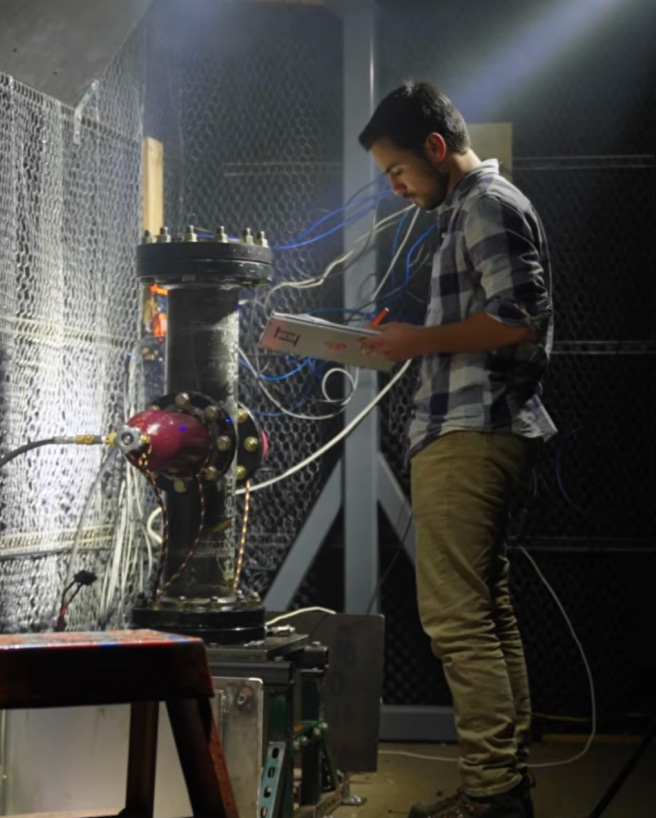
Mike Grace x Ivan Turchak. New Space Economy podcast Ep.03

Can A Giant Potato Cannon Throw Things Into Space Cheaper Than Rockets? Longshot Think so!
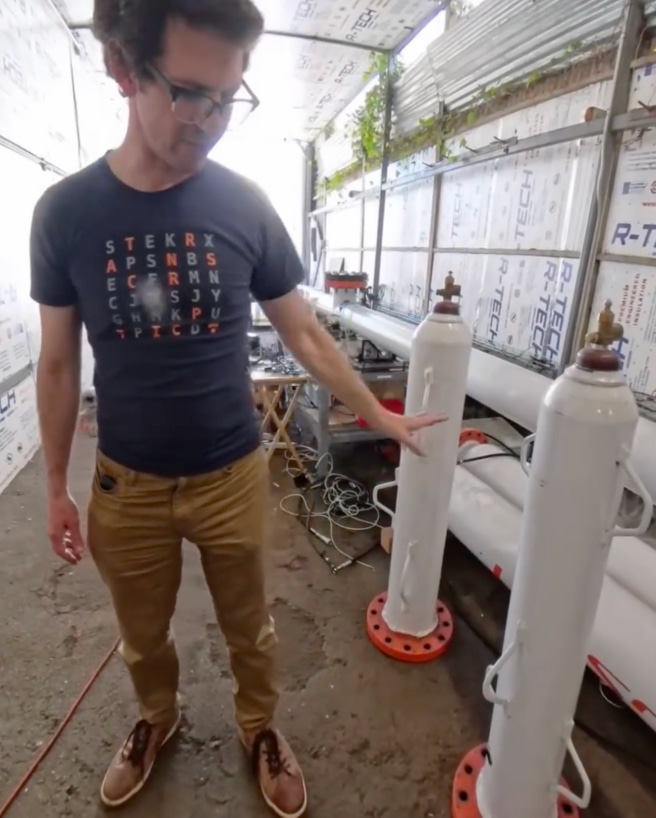
They're Building an Actual Space Gun | Longshot Space
Hyperstition #12: Building a Giant Space Gun

Use the official Longshot Space logo files below when referencing the company in press, partner materials, investor decks, or media coverage.